If you’re building a faceless YouTube channel, your voice generator matters more than your editing software — it’s the one thing viewers hear in every single video. A robotic-sounding narrator kills watch time no matter how good your script or visuals are.
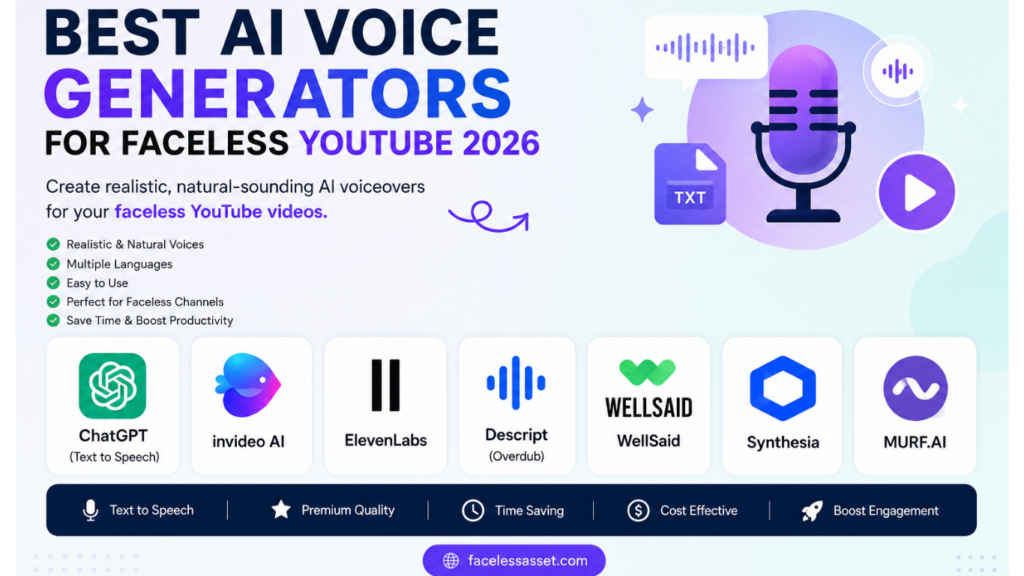
We compared the leading AI voice generators creators are actually using in 2026, based on pricing, voice realism, and how well each one fits a YouTube workflow. Short answer: ElevenLabs is the best pick for realism and emotional range, while OpenAI TTS and Notevibes are the best value options if you’re just starting out.
Quick Comparison Table
| Tool | Best For | Free Plan | Starting Price | Realism |
|---|---|---|---|---|
| ElevenLabs | Storytelling, true crime, emotional narration | Yes (~10 min/mo) | $6/mo | Highest |
| Murf AI | Finished voiceover + built-in video/timeline editor | Free trial | $19/mo (annual) | High |
| Notevibes | Best overall value for budget creators | 90+ free voices, no signup | $19/mo | High |
| OpenAI TTS | News, tutorials, factual explainers | Pay-as-you-go | Usage-based, low cost | Good |
| Google Cloud TTS | Multilingual channels | Limited free tier | From $4/1M characters (WaveNet) | Good–High (tier dependent) |
1. ElevenLabs — Best Overall for Realism
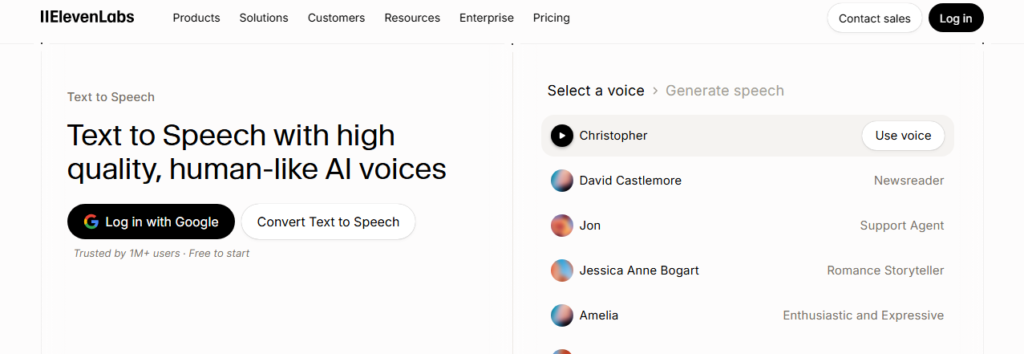
ElevenLabs is widely regarded as the most realistic AI voice generator available in 2026, producing <cite index=”10-1″>voices that breathe, show emotion, and pause naturally—a big part of why most successful faceless YouTube channels use it </cite>. <cite index=”9-1″>It’s the go-to choice for content built on storytelling, emotional hooks, or dramatic pacing, since ElevenLabs earns its premium price through that emotional range. </cite>
Standout features:
- Voice cloning from a short sample recording
- <cite index=”10-1″>Support for 70+ languages plus automatic AI dubbing into 29+ languages using the original speaker’s voice</cite>
- Large community voice library with thousands of options
- Low-latency API for creators who want to automate their pipeline
Pricing: The <cite index=”10-1″>free plan gives roughly 10 minutes of audio per month; paid plans start around $6/month. </cite>
Pros: Most natural-sounding voices on the market; strong cloning quality; wide language support.
CONS: Character/credit limits can get expensive fast at higher volumes; fewer built-in video/editing tools than Mur2026.”
Best for: Storytelling, true crime, motivational, and narrative-heavy faceless channels
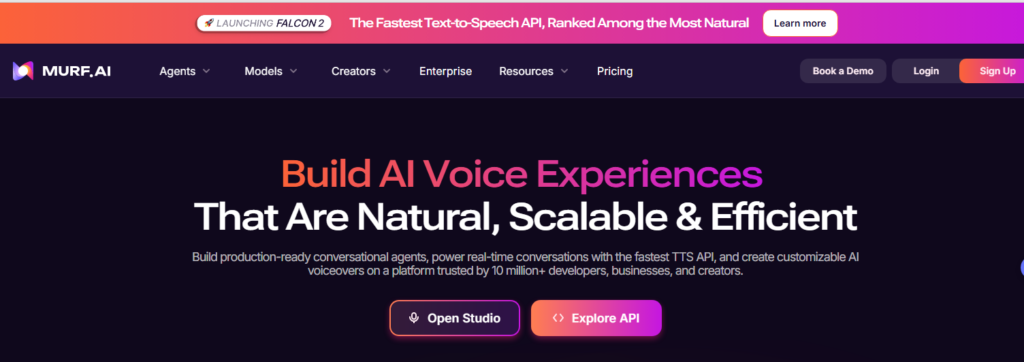
2. Murf AI—Best for a Finished, Ready-to-Publish Voiceover
Murf stands out because it doesn’t just generate a voice clip—it pairs 200+ voices across 30+ languages with a built-in video and timeline editor so that you can sync narration directly to your slides or footage in one place. </cite> Extra tools include a voice changer, AI translation, and access to a large licensed soundtrack library.
Pricing: <cite index=”11-1″>Paid plans start at $19/month on annual billing and include commercial rights; enterprise tiers add voice cloning and compliance certifications. </cite> One thing to watch out for—Murf sells voice generation in hours per year rather than unlimited minutes, so check your usage before committing. </cite>
Pros: All-in-one editor saves time syncing audio to video; strong for teams; commercial rights included. Cons: The billing model (hours/year) can be confusing; it’s slightly less “human” than ElevenLabs at the top end.
Best for: Creators who want to go from script to synced, publish-ready video without leaving one tool.
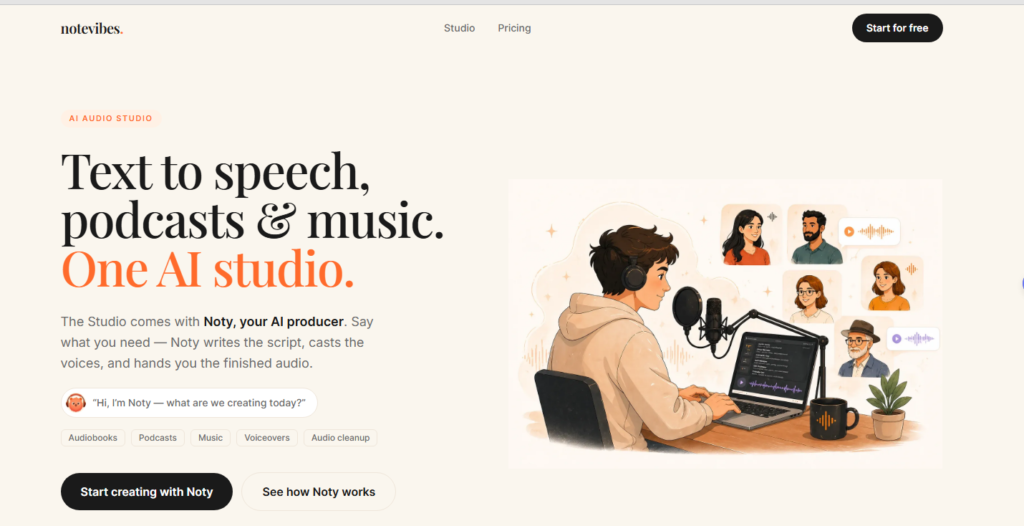
3. Notevibes—Best Value for Budget Creators
<cite index=”8-1″>Notevibes offers the highest overall value for YouTubers at $19/month, including 550+ voices, 80+ emotion tags, and 500,000 credits per month through a simple web interface with no technical setup.</cite> For context, <cite index=”8-1″>500K credits covers roughly 12 hours of audio — noticeably more than the 30K credits you’d get on ElevenLabs’ comparable $6 starter tier.</cite>
Standout features:
- <cite index=”8-1″>90+ free voices you can test before signing up at all</cite>
- Built-in AI podcast generator and PDF/URL import for turning existing content into narration
- SSML support for fine control over pacing and emphasis
Pros: Very generous monthly credits for the price; easy for beginners; no account needed to test voices. Cons: Voice realism is strong but slightly behind ElevenLabs for highly emotional delivery.
Best for: Creators publishing frequently who need volume without a big monthly bill.
4. OpenAI TTS — Best Low-Cost Option for Factual Content
<cite index=”9-1″>For channels focused on news, tutorials, or factual explainers, OpenAI TTS gets you most of the way to ElevenLabs’ quality at a fraction of the cost.</cite> It’s usage-based rather than a flat subscription, which makes it attractive for creators who don’t publish daily.
Pros: Very affordable for lower-emotion content; simple API; reliable output
Cons: Less expressive than ElevenLabs for storytelling or dramatic content; no native video editor
5. Google Cloud TTS — Best for Multilingual Channels
Google’s tiered pricing changed in 2026: <cite index=”8-1″>WaveNet voices now cost just $4 per 1 million characters at genuine neural-era quality, while the higher Neural2 tier runs $16/1M and the premium Chirp 3 HD tier costs $30/1M. </cite> This makes it one of the cheapest options for creators who need reliable multilingual narration at scale, provided you’re comfortable working with cloud tools rather than a simple web dashboard.
Pros: Extremely cheap at the WaveNet tier; strong multilingual support; scales well for high-volume creators
Cons: Requires more technical setup than consumer-facing tools; interface isn’t built for creators
Best for: Channels translating content into multiple languages or generating very high volumes of audio
How to Choose the Right Voice Generator
- Storytelling, true crime, motivational content → ElevenLabs (emotional range matters most)
- Explainers, tutorials, news-style videos → OpenAI TTS or Notevibes (clarity over drama, lower cost)
- You want everything in one editor → Murf AI (voice + timeline sync in one place)
- You publish in multiple languages → Google Cloud TTS (cheapest at scale)
- You’re just starting and want to test before paying → Notevibes or ElevenLabs’s free tier
Budget is usually the deciding factor early on—start with a free tier, confirm your niche’s voice style resonates, then upgrade once you know your publishing frequency.
Frequently Asked Questions
Is AI voice generation good enough for monetized YouTube channels? Yes—many of the largest faceless channels today run entirely on AI narration. YouTube doesn’t penalize AI voices; what matters is whether viewers stay engaged, which comes down to voice quality and pacing, not the fact that it’s synthetic.
Do I need to disclose AI voices on YouTube? YouTube has content disclosure requirements for realistic AI-generated content in some cases, so check YouTube’s current altered/synthetic content policy before publishing, since these rules have been updated periodically.
What’s the cheapest way to start? Test free tiers first—ElevenLabs and Notevibes both let you generate real samples with no upfront cost, which is enough to validate whether a voice fits your niche before you commit to a subscription.
Conclusion
For most faceless YouTube creators starting, ElevenLabs remains the benchmark for realism, while Notevibes and OpenAI TTS offer the best value if you’re publishing frequently on a budget. Test a couple of free tiers with your actual script before committing to a paid plan—the right voice for your niche matters more than the “best” voice on paper.
Next, check out our guide on [Best AI Script Generators for Faceless YouTube] to complete your production pipeline.