Your voice generator can be flawless, but if the script underneath it is flat, viewers click away in the first 5 seconds. Most AI script tools write clean, logical sentences that sound like AI — and that’s exactly the problem: a real YouTube script has to hold attention, build curiosity, and match your title and thumbnail promise, not just explain a topic.
We compared the AI script generators built specifically for YouTube (not general writing assistants) to see which ones actually structure content for retention. Short answer: purpose-built tools like vidIQ and OverseerOS outperform general AI writers like ChatGPT for faceless content, because they bake in hook timing, pattern interrupts, and production notes that a generic prompt won’t give you.
Quick Comparison Table
| Tool | Best For | Free Plan | Starting Price | YouTube-Specific Structure |
|---|---|---|---|---|
| vidIQ | All-in-one channel growth + scripting | Yes ($0 tier) | ~$7.50–$19/mo | Yes |
| OverseerOS | Full pre-production command center | Trial | Check pricing page | Yes (deep) |
| Jasper | Marketers/educators, structured scripts | Trial | Check pricing page | Partial |
| ChatGPT / Claude (raw prompt) | Budget option, full control | Yes | Free–$20/mo | No (needs manual structuring) |
| Pictory | Script + auto video assembly combined | Trial | Check pricing page | Partial |
Note: several of these tools revise pricing tiers frequently—always confirm current numbers on the vendor’s pricing page before publishing your comparison.
1. vidIQ—Best All-in-One for Growth + Scripting
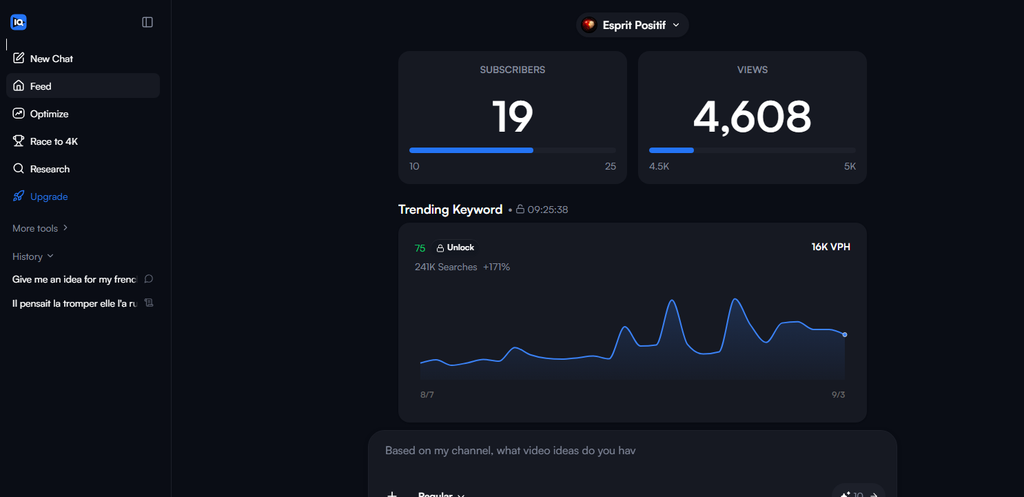
<cite index=”24-1″>vidIQ runs on three creator tiers in 2026 — Free, Boost, and Max — plus an Enterprise track for agencies, with AI Credits acting as the currency separating each tier.</cite> Beyond scripting, it doubles as a full YouTube growth toolkit: keyword research, competitor tracking, and title/description generation.
Standout features:
- AI-generated video ideas and outlines based on trending topics in your niche
- Built-in keyword and SEO research so your script targets searchable topics
- Real-time stats overlay inside YouTube Studio
Pricing: Reported starting points vary by source between roughly $7.50/month and $19/month for entry paid tiers, with higher tiers reaching $39–$79/month depending on credits and features. <cite index=”26-1″>Pricing is revised often, so confirm the current numbers on vidiq.com/plans before you commit.</cite>
Pros: Combines scripting with SEO/growth tools in one subscription; strong free tier to test first Cons: Pricing tiers and credit systems have changed multiple times in 2026, making cost prediction tricky; scripting is one feature among many rather than the sole focus
2. OverseerOS—Best for a Full Faceless Production Workflow
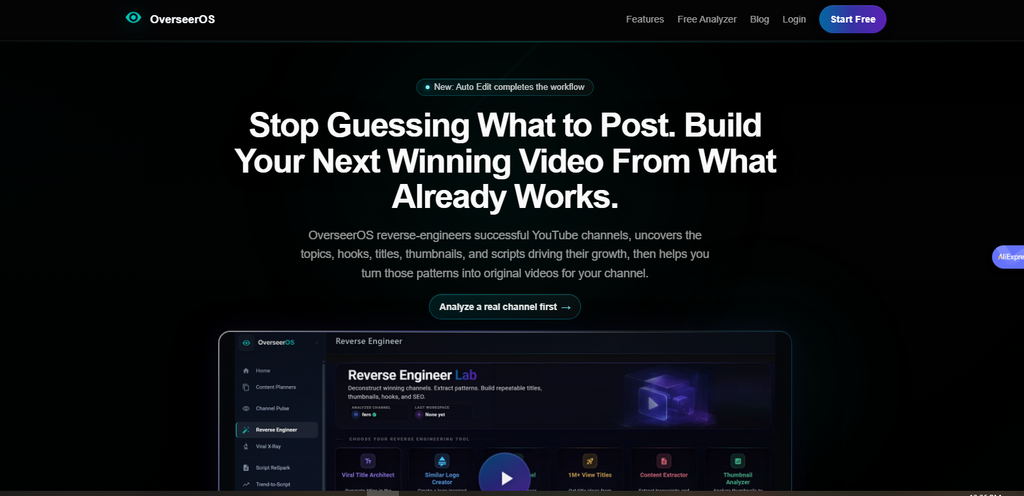
<cite index=”18-1″>OverseerOS is built as a YouTube-native scripting workflow where Script Studio, a Writing Agent, ReSpark, Trend-to-Script, Creator DNA, and Channel Planner context all feed into the same script system,</cite> rather than generating a script from a blank prompt. <cite index=”20-1″>It positions itself as a pre-production command center covering channel analysis, competitor tracking, winning topics, titles, scripts, thumbnails, and even ElevenLabs-powered voiceovers in one place.</cite>
Standout features:
- Scripts generated from proven channel patterns rather than a generic prompt
- “Creator DNA” — aims to match scripts to your channel’s existing tone
- Covers the full pre-production pipeline (topic validation through voiceover), not scripting alone
Pros: Deep YouTube-specific structuring (hooks, retention, tone-matching); reduces the “sounds like AI” problem better than general writers Cons: More complex than a simple script generator if all you need is fast drafts; check current pricing directly since it’s a newer, fast-moving product
Best for: Creators building a repeatable, multi-video-per-week faceless production system, not just occasional scripts.
3. ChatGPT / Claude (Manual Prompting) — Best Free/Budget Option
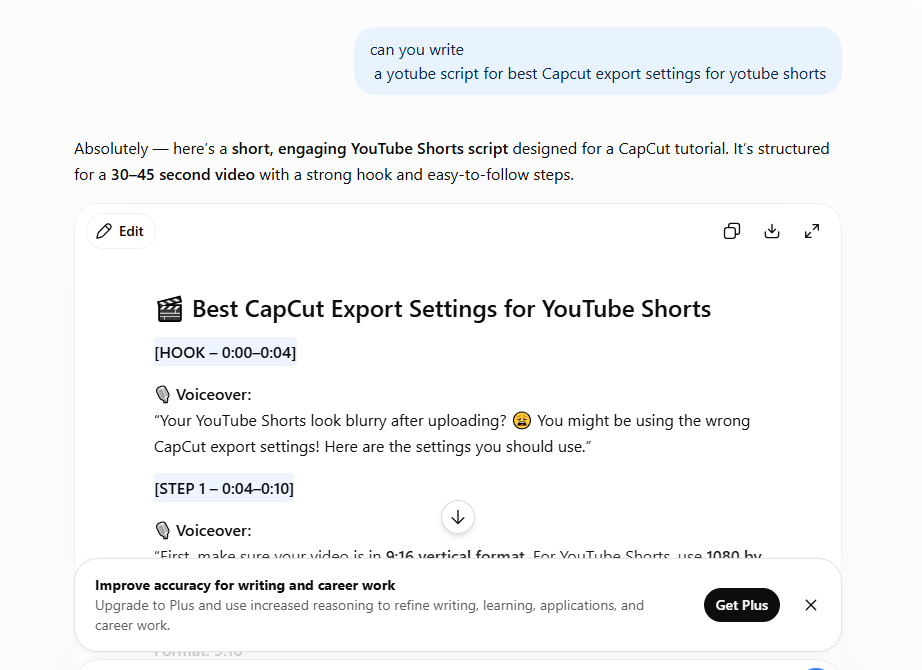
<cite index=”19-1″>General AI writers like ChatGPT tend to produce blog-style paragraphs without video structure — no scene markers, hook timing, or visual cues — which means extensive manual restructuring is needed to turn the output into an actual usable YouTube script.</cite> That said, it’s free (or cheap) and fully within your control if you’re willing to build your own prompt template.
How to make it work: Build a reusable prompt that forces structure — ask explicitly for a 3-second hook, a pattern interrupt every 15-20 seconds, scene/visual notes, and a title-matching payoff. Save that prompt as a template so every script follows the same skeleton.
Pros: Free or very cheap; total creative control; no vendor lock-in Cons: Needs a well-engineered prompt and manual editing to hit YouTube retention patterns; no built-in trend or keyword research
Best for: Creators on a tight budget who are willing to build and refine their own prompt template.
4. Purpose-Built Video Script Tools (Jasper, Pictory, and similar)
<cite index=”18-1″>Tools like Jasper and Pictory are useful, but they solve different parts of the scripting and production process rather than being pure YouTube script specialists.</cite> Jasper leans toward structured, marketing-style scripts good for explainer and SEO-focused content, while Pictory blends scripting with automatic video assembly — useful if you want script and rough-cut video from the same tool.
Pros: Good for explainer/educational tone; Pictory saves a step by pairing script with visuals Cons: Less specialized for faceless YouTube retention patterns specifically compared to vidIQ or OverseerOS
Best for: Educators and marketers who want structured, professional-sounding scripts without heavy YouTube-specific optimization.
How to Choose the Right Script Generator
- You want scripting bundled with SEO/growth tools → vidIQ
- You’re running a multi-video-per-week faceless channel and want a full production system → OverseerOS
- You’re on a tight budget and don’t mind building your own prompt template → ChatGPT or Claude
- You want structured, professional scripts for explainer/educational content → Jasper or Pictory
The real differentiator across all of these: does the tool understand YouTube-specific retention mechanics (hook timing, pattern interrupts, title/thumbnail alignment), or does it just write clean paragraphs? <cite index=”19-1″>Video-specific tools generally output scripts with retention-optimized formatting — 3-second hooks and pattern interrupts every 15-20 seconds — while general writers require you to add that structure manually.</cite>
Frequently Asked Questions
Can AI write a full YouTube script without sounding robotic? Yes, but it depends on the tool and the prompt. Purpose-built YouTube script tools bake in retention structure by default; general AI writers need a detailed, YouTube-specific prompt template to avoid sounding generic.
Do I still need to edit AI-generated scripts? Almost always — even the best tools benefit from a human pass on the hook, title alignment, and final tightening, since these sections have the biggest impact on click-through and retention.
What’s the cheapest way to start writing YouTube scripts with AI? Start with ChatGPT or Claude and a well-built prompt template — it costs nothing to little, and you can upgrade to a purpose-built tool once you know your publishing volume and what structure works for your niche.
Conclusion
If you want scripting bundled with growth tools, vidIQ is the practical starting point. If you’re building a serious multi-video-per-week faceless operation, OverseerOS’s full production workflow is worth the deeper investment. And if you’re just starting out on a budget, a well-built ChatGPT or Claude prompt template gets you most of the way for free.
Next, check out our guide on [Best AI Voice Generators for Faceless YouTube] to pair your script with a natural-sounding narrator.